HP Large Format FAQs
These FAQs will help you find the top-rated HP products with the lowest prices.These are common questions our customers ask about HP deals, prices, ratings, and more.
What is media?
Media is the material that your graphic is printed on. you can print on many different types of media including banner material, adhesive backed vinyl, fabrics, backlit material, and many others.
What is laminate?
Laminate is applied on top of media, and in many cases helps further protect the graphic from abuse. you can generally use a cold lamination film process and have a multitude of laminates, ranging from matte to high gloss that can be used depending on the use and application of the project. you can also use liquid laminates on certain applications such as wall coverings.
What is substrate?
Substrates consist of foam-core, gatorboard, MDO board, plexiglass, alumacor, polystyrene, PVC, etc. Your adhesive backed graphics are mounted to these types of materials to add strength and rigidity.
What can you print on with wide format printers?
-
- Vinyl
-
- Cloth
-
- Glass
-
- Wood
-
- Foam Board
-
- Corrugated Plastic
-
- Metal
What is the best wide format inkjet paper for my application?
Media choice is subjective and will vary greatly from user to user. Careful consideration of your end objective will help determine the best wide format inkjet paper or media that is right for you.
What kinds of media are available?
Calendered Vinyl
General-purpose signs and graphics; moderate to good exterior durability. Greater production yields equals less cost. Stiffer/thicker film equals easier handling. Thickness of film increases resistance to abrasion. Intended for flat, smooth opaque application surfaces.
Cast Vinyl
Designed for maximum outdoor durability and conformability. Cast films also maintain their color and other properties better than other vinyl films. Better performance of pigments and UV absorbers, less shrinkage. Durability of cast films is generally higher than that of other vinyl films. Cast films can be made very thin which produces a conformable product that allows application over substrates with rivets, corrugations, and complex curves. Excellent for flat and irregular opaque application surfaces and vehicles.
Translucent
Formulated for illuminated signs and backlit displays. Intended for flat rigid, flex face applications, and maximum light transmission.
Reflective
Ideally suited to safety and commercial signs or vehicle graphics that require viewing both day and night.
Mirror Finish
Silver and gold with a polished chrome, matte, brushed, or specialty-textured surface.
Etched Frosted
Simulates the appearance of etched or sandblasted glass on window fronts, entry doors, and partitions.
Banner
Durable, flexible, tear and fade resistant material will withstand most weather conditions. Available in a variety of scrim, smooth, and mesh materials. Thickness of film increases resistance to abrasion.
Specialty
Variety of specialty media such as photo paper, artist canvas, perforated window film, static cling, street & wall graphics & more.
What is large format printing?
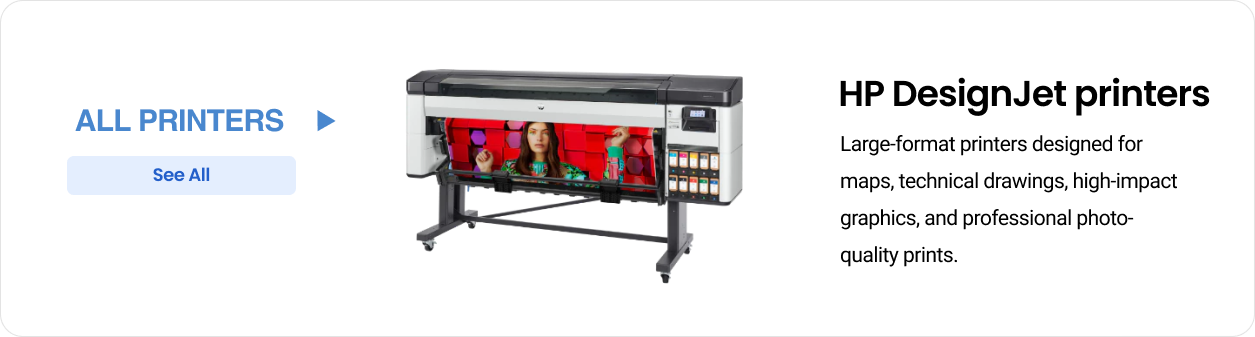
Large format printing, also called wide format printing, refers to projects that require specialized printing equipment which will accommodate larger printing projects such as posters, large maps or charts, store displays, trade show wall panels, blueprints, banners, large-scale advertisements such as building wraps
What does wide format printer mean?
A printer that prints on large paper, which can range from two to more than 15 feet in width. Such printers typically use inkjet technology to print on a variety of output, including premium glossy-coated paper for signs and posters. The price range of these devices is as wide as the paper, from as little as a thousand dollars to more than a half million.
What is considered large format printing?
Large format printing, also called wide format printing, refers to projects that require specialized printing equipment which will accommodate larger printing projects such as posters, large maps or charts, store displays, trade show wall panels, blueprints, banners, large-scale advertisements such as building wraps