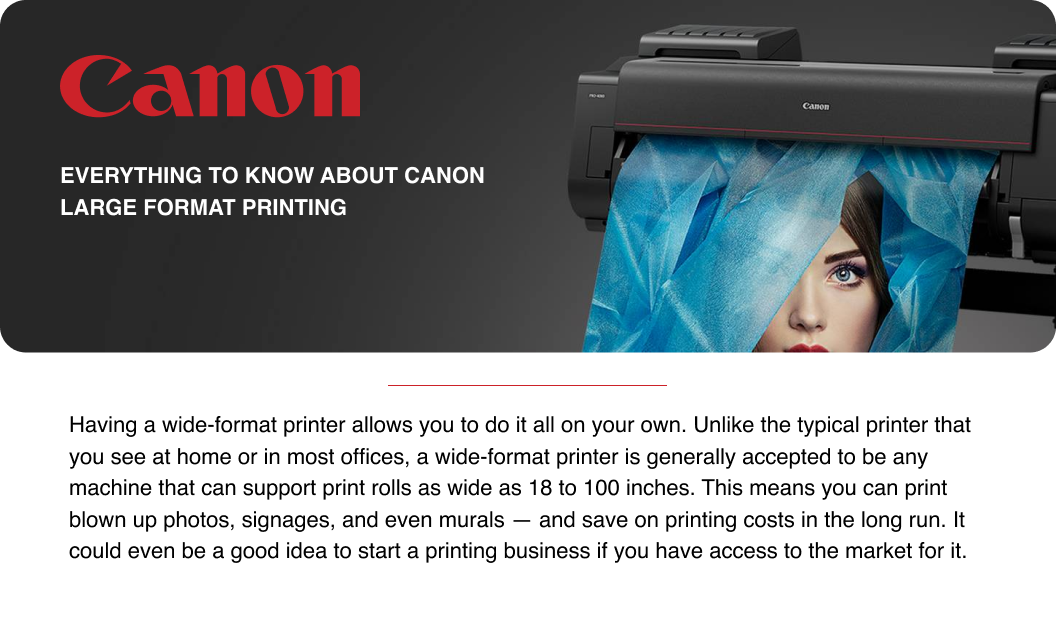
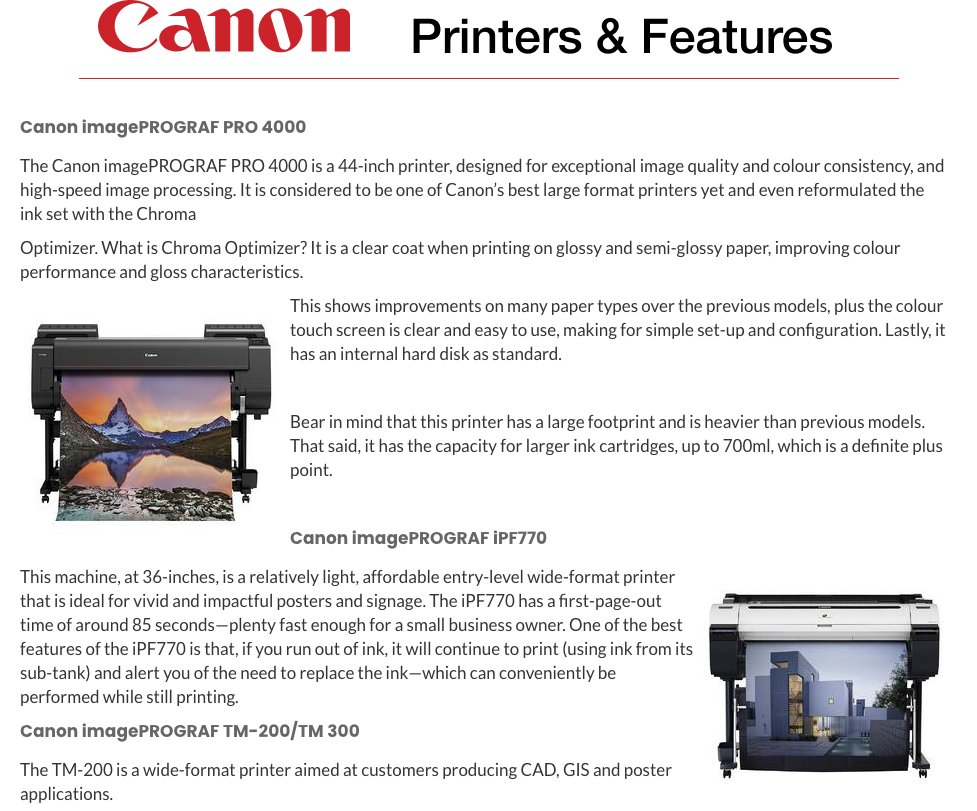
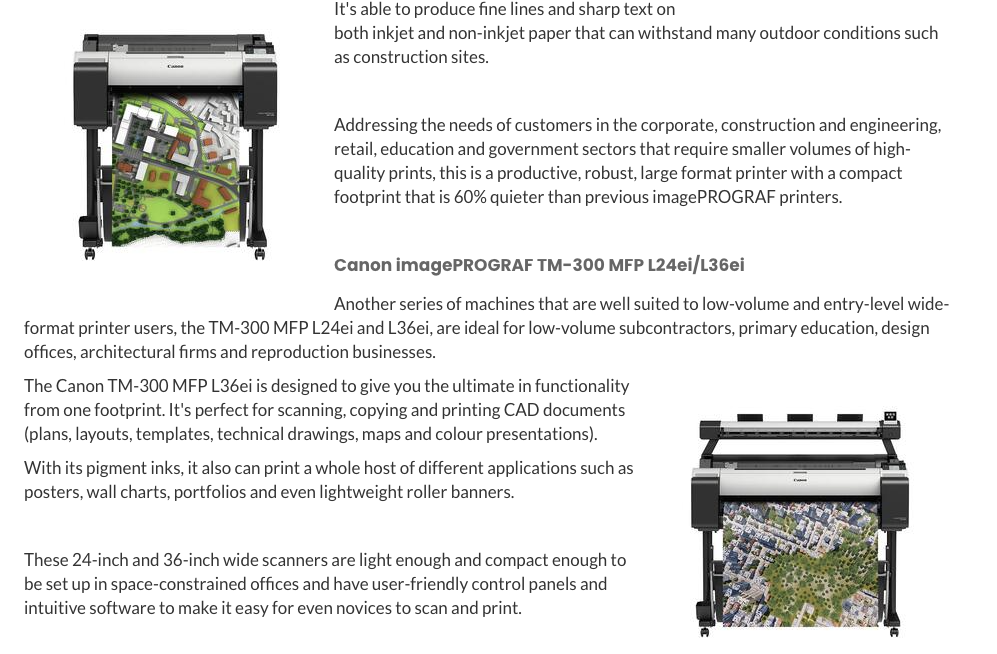
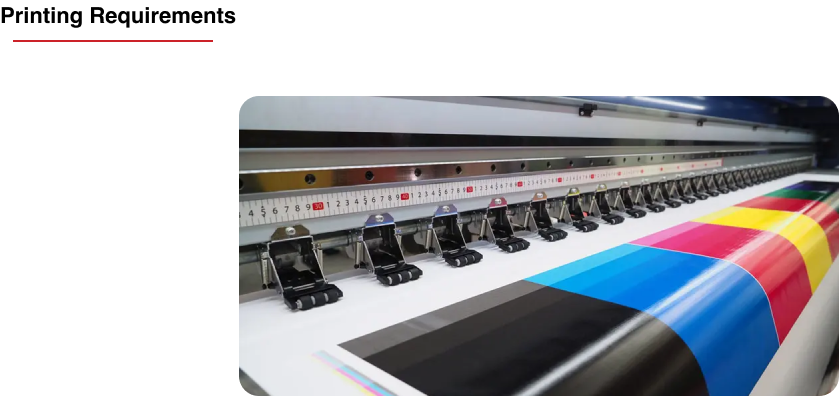
Wide-format printers—also known as grand-format or large-format printers/LFPs—are mostly used for printing on material that is at least 18 inches wide. However, they can print on virtually any size. If your business regularly outsources large-format print jobs, you’re potentially missing out on a whole host of benefits that come with investing in an in-house wide-format printer.
Some industries have a more substantial need for wide-format printers than others. The most common industries are:
Engineering and Architecture
LFPs are ideal for printing CAD/GIS drawings and 3D renderings.
Interior design and construction
For printing room-design concepts and layouts, site plans, blueprints etc. Interior designers like to be able to truly customize wall art and wallpaper to create a unified look to the space.
Marketing and Advertising
For printing all manner of marketing materials from banners and posters, to vehicle wraps and trade show graphics. All with the flexibility to print quickly, and make campaign adjustments if needed. Banners are, in fact, one of the most popular large-format applications on the market.
Education and Post-Secondary Institutions
For printing complex charts, graphs and maps, and even advertisements for activities on campus.
Manufacturing, Automotive, and Transportation
For printing cartography maps, presentations, facilities maps, aerial photographs, interior and exterior posters for public transit etc.
Health Care and Entertainment
Wide-format printers are perfect for large-scale graphics printing for movie theatres, arts buildings, and in hospitals—particularly children's hospitals.
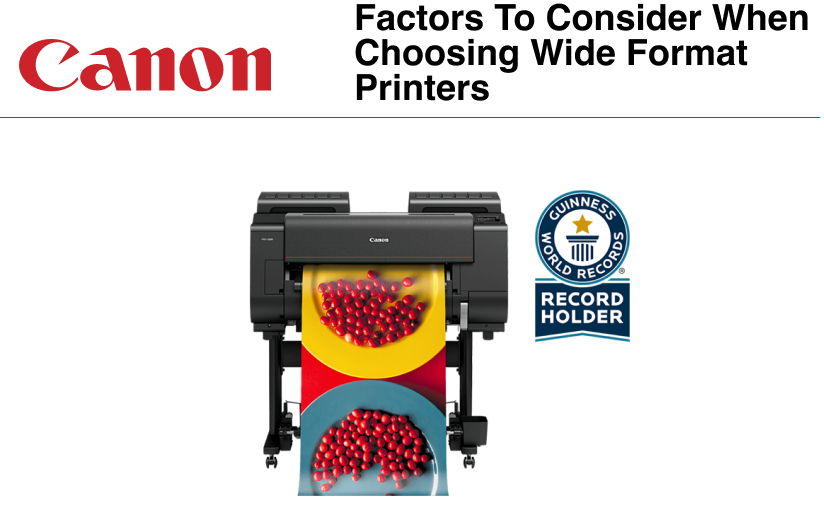
Purchasing a wide-format printer for your office is not a light decision—they are certainly not cheap! Many questions come with such a significant investment. Here we cover the biggest factors that should be taken into consideration before pulling out your wallet.
Before anything, assess your printing priorities. Is this going to be your first time using a large format printer or are you already a pro when it comes to handling them? Your current process and experience will definitely play a role in your future printing goals, so find out which of the following applies to you or your business:
Buying for the first time: If you’ve decided to do the printing yourself, start a new business, or branch into a different market, you’ll need to start investing in a wide-format printer that’s both efficient and easy to use.
Upgrading : You may find your current printer to be lacking a few modern technologies that could really help improve your production and output quality. In this case, you’ll definitely have to look for a newer or higher model.
Adding to production: You may need an additional printer to produce a larger quantity of prints at the same time or to be able to produce a different type of material. The latter would require you to consider the next factor below.
Given that this type of printer can produce prints of many different sizes, it can be suitable for a wide range of applications. However, wide-format printer models often have very specific capabilities, so you’ll need to determine what you’re going to be using its output for. Common wide-format printing categories include:
- Photography
- Fine art
- Vinyl banners
- Indoor signage
- Vehicle stickers
- Textiles
- Murals and other wall coverings
It would help to talk to a BDI provider to help you figure out your unique printing requirements.
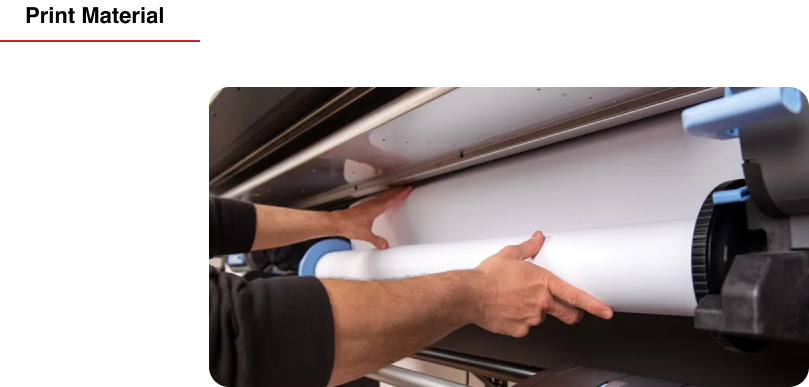
Determining the exact type of materials you’ll need to print will help you narrow down your choices. It will dictate the best type of ink for your printing needs and, in turn, tell you which printer options are available.
You’ll learn that wide-format printers can print on multiple other surfaces aside from paper and tarpaulins, like plastics, metals, wood, acrylic, and fabrics. And if you’re adding to your current printer setup, you should also check if your current printers’ type of ink will be compatible with your new machine.
At the same time, it’s also important that you determine the size requirements since wide-format printers have different size limitations.
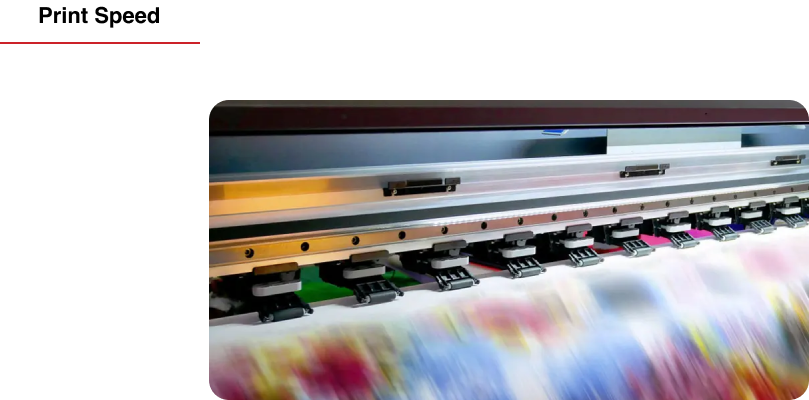
Another essential factor to consider is print speed. This is particularly important for those who need to keep up with a significant workload. Some printers boast of faster print speeds compared to others but are often more expensive, but you’ll want to stretch your budget if you need high-volume printing at high speeds.
On the other hand, if you don’t need a quick turnaround, you could get away with a base model that meets all your other requirements.
1. HOW THE LARGE FORMAT PRINTING PROCESS WORKS
The printing process for large format printing is very similar to that of digital printing, which makes it an ideal process for full-color items. The press will lay down toner through the use of large nozzles. The ink is directly applied to the product, which creates a much more authentic feel than mounting printed pieces to substrates. The printing process is quick like digital printing and has the ability to produce high-quality images and photographs.
2. WHAT TYPES OF PRINTERS ARE USED FOR LARGE FORMAT?
Large format printing presses are often either flatbed printers, roll-to-roll printers, or a combination of both. In a flatbed printer, a substrate will be placed on the bed, which will act as a carrier to propel the material through the printer. During the printing process, the UV light hits the liquid ink and turns it into solid ink on the chosen substrate. Flatbed printers are great options for those who are looking to print directly on thicker or less traditional substrates.
A roll-to-roll printer is often used to print items such as banners, canvas, or printed pieces on flexible materials that will come on rolls. The roll of material will be loaded on one side and be carried through the printer where it will be re-rolled onto another uptake roller. These types of printers are ideal for long runs of flexible material as the process can be streamlined and production can move faster with less interruption.
3. HOW SHOULD FILES BE PREPARED TO CREATE THE BEST FINISHED PRODUCT?
Due to the size of the pieces being printed, file preparation becomes essential to ensure that you end up with a high-quality product. When designing your files, you will need to note that the maximum width of most large format printers is 61″ or less and the length will often be determined by the length of the material used. For banners and other roll-to-roll print material, the length can virtually be any length.
To produce the best quality image, you will need to use the highest resolution file possible to make sure the quality does not become compromised when it is enlarged. Additionally, you will want to account for the fact that the printers will print in standard CMYK breakdown, so creating your files in these separations will give you the best results.
4. WHAT PRODUCTS ARE IDEAL FOR THE LARGE FORMAT PRINTING PROCESS?
One of the most versatile things about large format printing is the fact that it can be the ideal printing process for many products. Some of the most common products that large format printing is used for are:
Banners
Point of Purchase Displays
Wall and Floor Graphics
Tradeshow Signage
Posters
Yard Signs